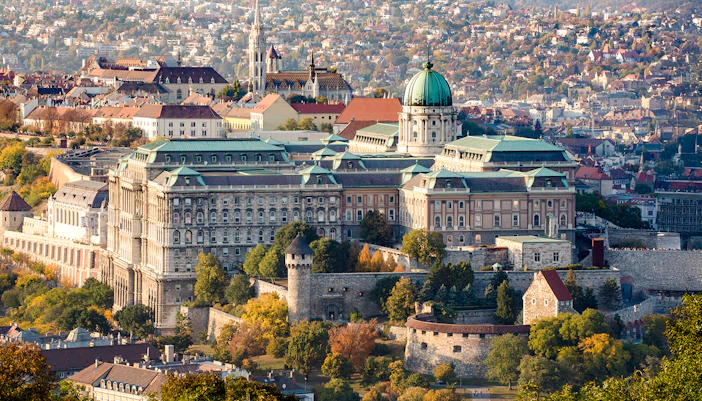
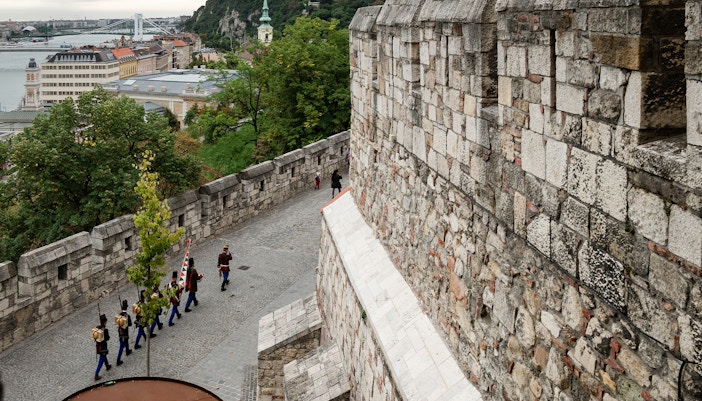
The easiest route is to arrive early, come up by bus or funicular, and start outside before the indoor spaces claim your time. Walk the courtyards and terraces first while the light is softer and the views toward Parliament are clearer, then choose one major museum rather than rushing both. Finish on the southern terraces or nearby Castle District streets once the large tour groups begin to thin.
Quick Information
ADDRESS
Budapest, Szent György tér 2, 1014 Hungary
Timings
10:00–18:00
TICKETS
From $19.14
NUMBER OF ENTRANCES
4
Did you know?
Buda Castle’s origins date back to the 13th century, but its current Baroque appearance was shaped in the mid-18th century after multiple reconstructions.
The castle complex houses the Hungarian National Gallery, Budapest History Museum, and the National Széchényi Library, making it a cultural hub.
The Castle Hill Funicular, operating since 1870, offers a steep and scenic ride up to the castle with vintage wooden cars.
Is Buda Castle worth visiting?
You arrive on Castle Hill, and the city seems to fall away behind you. Wind sweeps across the terraces, church bells drift over the cobblestones, and the Danube opens up below in a wide silver ribbon. Buda Castle feels less like a single monument and more like an elevated world of courtyards, stairways, and lookout points.
It was built to protect and project royal power, then rebuilt again and again as Hungary changed hands, dynasties, and political eras. That long history is why the complex feels layered rather than polished, every courtyard carries traces of another version of the city.
The payoff isn't a single room or object, but the rare feeling of walking through Budapest's political, artistic, and military history while the city's best skyline keeps unfolding beside you.
Skip it if: Steep walks, cobblestones, and spread-out sights sound more tiring than rewarding.
What to see at Buda Castle?
1/7
The courtyards and gateways
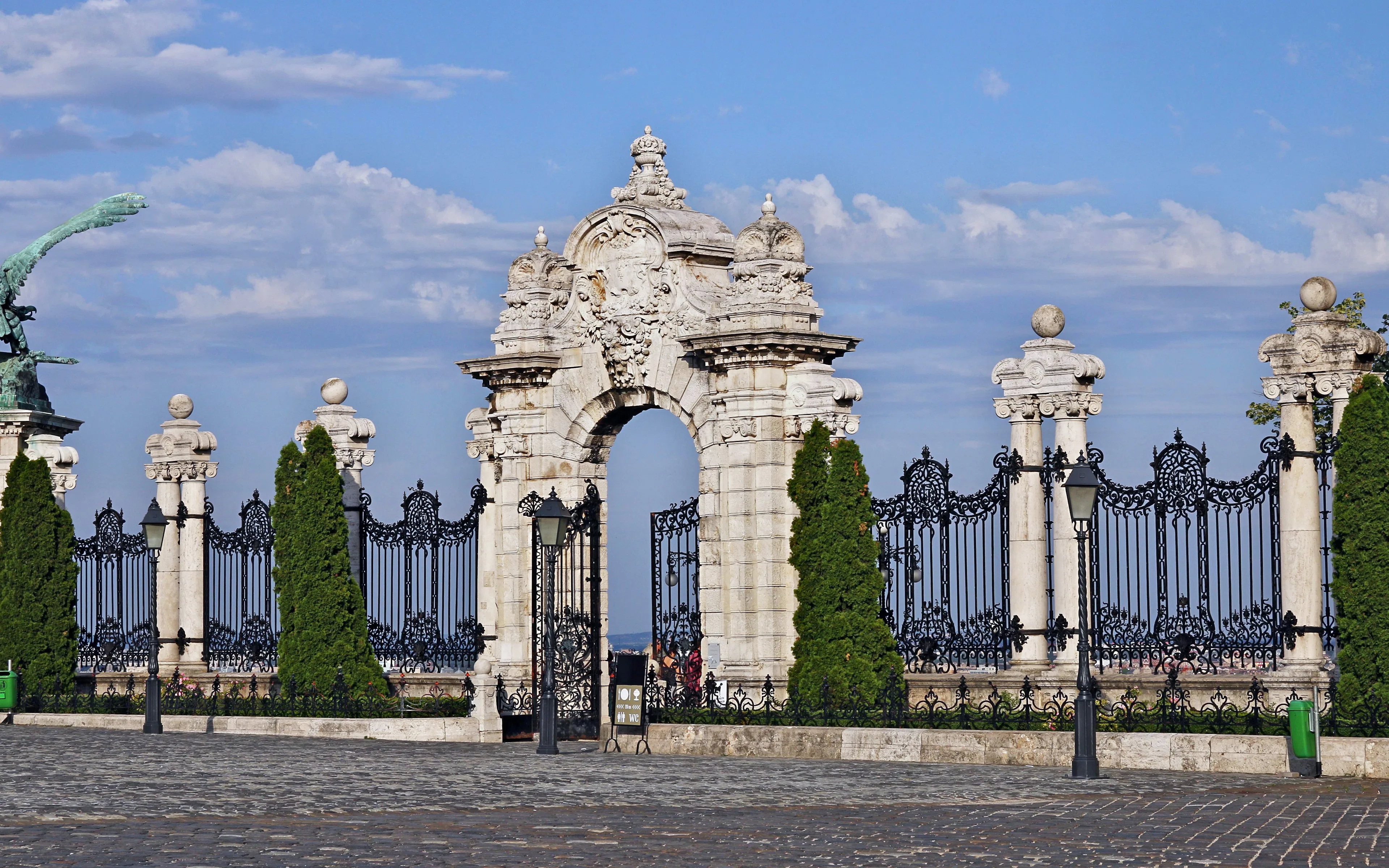
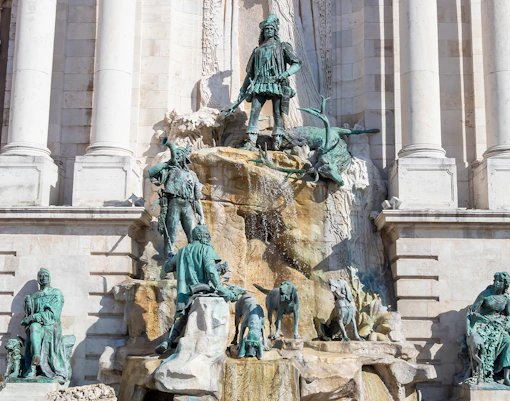
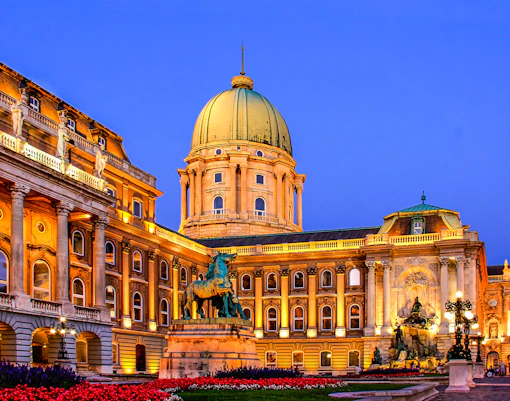
Start outdoors. The Habsburg Gate, Lion Courtyard, and broad palace terraces show the complex at its grandest, and they cost nothing to explore. This is also where you first get those wide Danube and Pest skyline views.
Hungarian National Gallery
Set inside the former royal palace, this is the castle’s strongest indoor stop for most visitors. Expect medieval altarpieces, 19th-century Hungarian painting, and 20th-century works. Art lovers can easily spend 2–3 hours here.
Dome Terrace
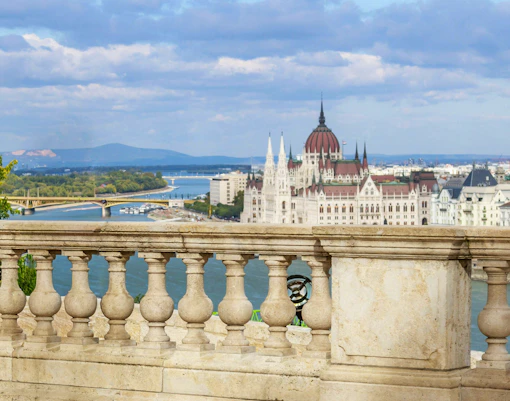
Part of the National Gallery visit, this rooftop terrace is where many people linger the longest. It offers a near 360-degree view over the river, bridges, and Parliament. Visit in clear weather; as winter closures do occur.
Budapest History Museum
This is the place to understand what stood here before the present palace. The medieval rooms, Gothic sculptures, and archaeological remains are more rewarding than the later galleries if your time is limited. Budget 1–2 hours.
The Hauszmann Story exhibition
A smart free stop if you want context before the paid museums. It explains how the palace looked and functioned around the turn of the 20th century, when Buda Castle became a ceremonial Habsburg royal residence.
Royal Riding Hall and Royal Guard Exhibition
These restored spaces help you picture the courtly side of castle life. The exhibition focuses on Hungarian royal guards, while the Riding Hall adds scale and ceremony. This is a good add-on if you want something beyond the big museums.
Savoy Terrace and the southern viewpoints
If you want the classic Buda Castle panorama without committing to a full museum visit, head here. The terraces frame the Danube, Gellért Hill, and central Pest beautifully, especially in the late afternoon.
How to explore Buda Castle
Time needed
Budget 2–4 hours for Buda Castle itself, depending on whether you stay outdoors or go deep into the museums. You can cover the terraces, courtyards, and main viewpoints in about 2 hours, but add another 1–2 hours if you also want the Hungarian National Gallery or the Budapest History Museum.
Must-see vs optional
- Must-see: Savoy Terrace, the palace courtyards, and either the Hungarian National Gallery or the medieval rooms in the Budapest History Museum.
- Optional: The Royal Guard Exhibition and Royal Riding Hall add useful courtly context, but set aside about 45–60 extra minutes.
Guided vs self-paced
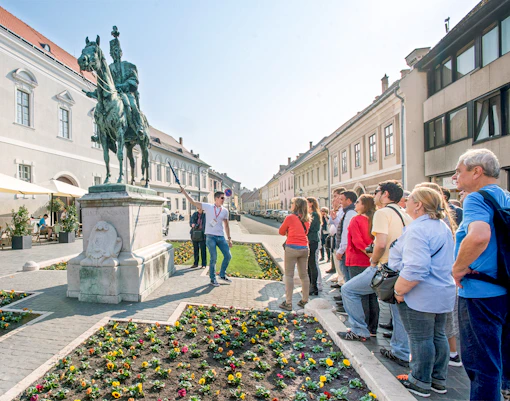
Guided tours add real value here because the palace layout no longer explains itself. A guide makes the rebuilt facades, lost royal rooms, and scattered historical layers legible in a way the open-air signage rarely does.
Brief history of Buda Castle
- 1247–1265: King Béla IV orders a fortified royal residence on Castle Hill after the Mongol invasion exposed how vulnerable Buda had become.
- 14th–15th centuries: The palace expands under Sigismund and Matthias Corvinus into one of Central Europe’s major Gothic and early Renaissance royal courts.
- 1541: Ottoman forces take Buda, and the castle enters a long period of military use and decline.
- 1686: The Habsburg recapture of Buda leaves much of the medieval palace badly damaged during the siege.
- 18th century: The complex is rebuilt in a Baroque form, giving the hilltop palace much of its present mass and ceremonial layout.
- 1944–1945: World War II fighting devastates the castle again, leading to major postwar reconstruction and a new life as a museum complex.
- Today: Buda Castle anchors Budapest’s UNESCO-listed Castle District and houses the Hungarian National Gallery, the Budapest History Museum, and major cultural exhibitions.
Architecture of Buda Castle
Style
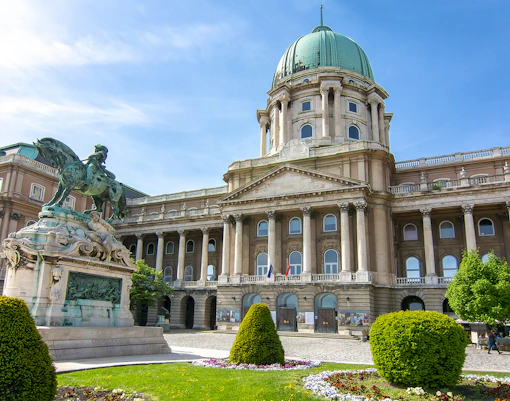
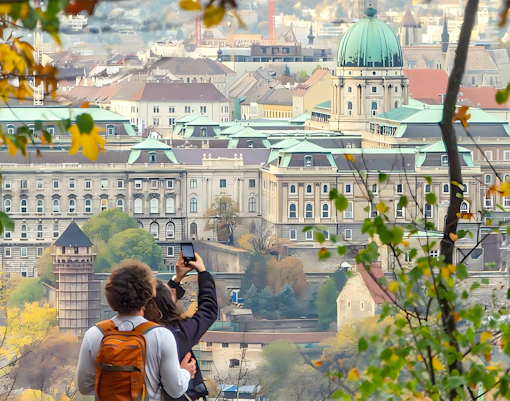
Baroque dominates the palace you see today, but the experience is richer because medieval and Renaissance layers still shape the hilltop plan and fragments below.
Materials
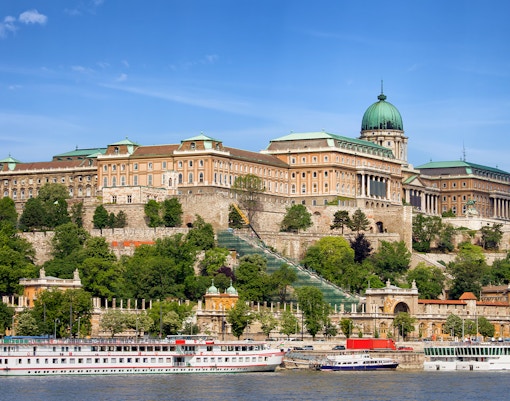
Stone, brick, stuccoed facades, copper roofing, and broad limestone terraces give the complex its pale, formal look from across the Danube.
Structure
The palace sits on terraces built over older fortifications and cellars. You can see this layering in its different levels, retaining walls, and long descending viewpoints.

On the ground
Buda Castle never reveals itself in one glance. You move through gates, ramps, and courtyards, then suddenly arrive at open panoramas over Pest.
Who built it?
Buda Castle has no single builder. King Béla IV founded the first fortress after the Mongol invasion, then later rulers, especially Sigismund and Matthias Corvinus, expanded it into a major royal seat. From the start, the project was political: the hilltop palace was meant to secure Buda and broadcast dynastic strength.
The palace’s current character owes a great deal to 19th-century architects Miklós Ybl and Alajos Hauszmann, who reshaped it for Habsburg ceremony rather than medieval defense. Their ambition was scale and imperial presence, which is why the castle reads today as a formal palace first and a fortress second.
Buda Castle and the Castle District
Many travelers say ‘Buda Castle’ when they really mean the whole hilltop district. That matters, because the palace complex, Matthias Church, Fisherman’s Bastion, museum interiors, and open courtyards all work on separate rhythms and tickets. The best visit is not a room-by-room palace tour, but a layered walk through a royal hilltop neighborhood. You move between free outdoor viewpoints, paid cultural stops, and civic spaces that still feel lived-in. Once you understand that, Buda Castle becomes easier to plan and far more rewarding to experience.
Frequently asked questions about Buda Castle
Yes, especially if you want royal history, museum time, and Budapest’s best skyline views in one stop. If you’d rather not piece the site together alone, book the Guided walking tour of Castle District before you go.
Most visitors need 2–4 hours. Stay closer to 2 hours if you’re mainly walking the grounds and viewpoints; plan half a day if you’re adding the Hungarian National Gallery, the Budapest History Museum, or a meal stop. Check the Buda Castle timings to plan your trip better.
Don’t skip Savoy Terrace, the palace courtyards, and the Hungarian National Gallery’s Dome Terrace when open. If you prefer history to art, make the medieval rooms in the Budapest History Museum your indoor priority instead.
Yes for first-timers and older children. The views, open courtyards, and funicular appeal widely, but cobblestones, slopes, and museum pacing can wear out younger kids. Families who want structure usually do better with a guided walk. Read this guide to plan your visit to Buda Castle with ease.
Yes, if you want a specific time slot. Small-group walks and evening experiences tend to go first in summer. The Guided walking tour of Castle District and Vampires & myths guided evening walking tour are safest to book in advance.
The easiest route is bus 16 or the Castle Hill Funicular from Adam Clark Square. Walking up works if you like steep streets, but save your energy for the courtyards, terraces, and museum stairs once you’re on the hill.
Yes, and the exterior is excellent after dark even when the museums are closed. For a more atmospheric experience, book the and Buda Castle vampires & myths guided walking tour, which makes good use of the quieter streets and floodlit views.