Complete Visitor Guide to Buda Castle in Budapest

Buda Castle is Budapest’s historic royal palace complex, best known for its hilltop setting, museum wings, and wide Danube views. The visit feels bigger than many people expect because you’re moving between open courtyards, terraces, separate museum entrances, and cobbled slopes rather than one single building. The biggest difference between a rushed visit and a good one is route planning: decide early whether you want views only, 1 museum, or a half-day cultural stop. This guide covers timing, entrances, tickets, and the smartest way to move around the hill.

Quick overview: Buda Castle at a glance

If you only decide 5 things before you go, make them these.

  • When to visit: The castle grounds are open daily, while the main museums usually run Tuesday–Sunday, 10am–6pm. Tuesday or Wednesday from 10am–11:30am is noticeably calmer than Friday–Sunday from 12 noon–4pm, because funicular riders, walking tours, and Bastion-bound day trippers all pile onto the hill by late morning.
  • Getting in: From about $9 for a museum ticket. Guided tours usually start from about $25. You can show up for the outdoor castle grounds, but museum entry and especially cellar or cave-style tours are much easier to secure in advance in summer.
  • How long to allow: 2–4 hours works for most visitors. It stretches toward a half-day if you enter both the Hungarian National Gallery and the Budapest History Museum, or add Matthias Church and Fisherman’s Bastion nearby.
  • What most people miss: The free Hauszmann Story exhibition and the National Gallery’s Dome Terrace both get skipped surprisingly often, even though they add the palace backstory and some of the best views on the hill.
  • Is a guide worth it? Yes, if you want the royal history, wartime damage, and palace layout to make sense; no, if you only want the courtyards, terraces, and 1 museum, where a good audio guide is usually enough.

🎟️ Guided tour and cave tour slots for Buda Castle sell out weeks in advance during summer. Lock in your visit before the time you want is gone.

See ticket options

Jump to what you need

Where and when to go

How do you get to Buda Castle?

Buda Castle sits on Castle Hill above Clark Adam Square on the Buda side of the Danube, a short ride from Deak Ferenc ter but a noticeably uphill walk once you reach the base.

Szent Gyorgy ter, 1014 Budapest, Hungary

Open in Google Maps

  • Bus: 16 or 116 → Szent Gyorgy ter → direct uphill route with the least walking once you get off.
  • Funicular: Budavari Siklo from Clark Adam ter → 2–3 min ride → fastest scenic option, but queues build quickly from late morning.
  • Walking: From Chain Bridge / Clark Adam ter → 15–20 min uphill → best if you don’t mind cobbles and stairs.
  • Taxi / rideshare: Drop-off near Szent Gyorgy ter → easiest with limited time, but road access can slow down in peak season.

Which entrance should you use?

Buda Castle works more like a spread-out complex than a single-gate attraction, and the mistake most people make is arriving at the hill without knowing which palace wing they actually need.

  • Palace grounds / courtyards access: Located off Szent Gyorgy ter. Best for exterior views, terraces, and a free stroll. Expect the heaviest foot traffic from 10:30am–1pm.
  • Hungarian National Gallery entrance: Located in the palace’s central-western wings. Best for art museum ticket holders and Dome Terrace access. Expect 5–15 min wait in summer.
  • Budapest History Museum entrance: Located in Building E at the southern wing. Best for history museum visitors and medieval remains. Expect 5–15 min wait outside peak tour hours.

When is Buda Castle open?

  • Castle grounds and courtyards: Open daily
  • Hungarian National Gallery: Tuesday–Sunday, 10am–6pm
  • Budapest History Museum: Tuesday–Sunday, 10am–6pm
  • Monday: Main indoor museums closed
  • Last entry: Usually around 1 hour before museum closing

When is it busiest? Friday–Sunday from late morning through mid-afternoon, especially from mid-May to August, when funicular arrivals, walking tours, and Danube-facing viewpoints all peak at once.

When should you actually go? Tuesday or Wednesday right after museum opening gives you quieter terraces, shorter funicular lines, and more room in the palace courtyards before tour groups fan out across the hill.

How much time do you need?

Visit typeRouteDurationWalking distanceWhat you get

Highlights only

Szent Gyorgy ter → palace courtyards → Danube-facing terraces → free Hauszmann Story → exit

2–2.5 hr

~2 km

You get the royal setting, the best outdoor views, and the palace atmosphere without museum fatigue, but you skip the major art and history collections inside.

Balanced visit

Szent Gyorgy ter → Hungarian National Gallery + Dome Terrace → palace courtyards → terraces → exit

3–4 hr

~3 km

This adds a serious indoor stop and the rooftop terrace, so the castle starts to feel like more than a viewpoint, but you still miss the deeper city-history story in the southern wing.

Full exploration

Szent Gyorgy ter → Hungarian National Gallery → Dome Terrace → palace courtyards → Budapest History Museum → southern terraces → exit

5+ hr

~4.5 km

You cover the castle properly, with art, medieval remains, and multiple viewpoints, but it’s a long day on cobbles and stairs, and the layout feels fragmented if you don’t pace it well.

Which Buda Castle ticket is best for you

Ticket typeWhat's includedBest forPrice range

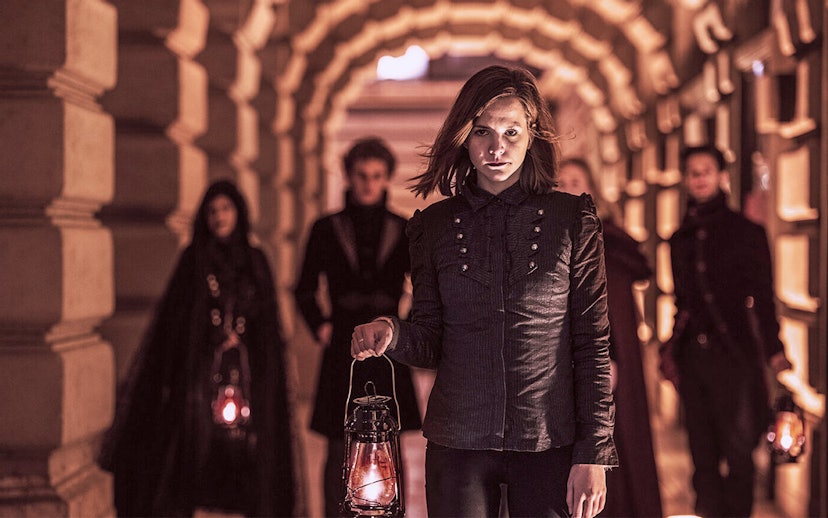
Buda Castle Vampires & Myths Guided Evening Walking Tour

2-hour night walking tour of Buda Castle + English or Spanish-speaking guide + lantern-lit stories, legends, and panoramic city views

An evening visit where you want the Castle District to feel more atmospheric, story-driven, and different from a daytime sightseeing walk

From €21

Tickets to Hungarian Royal Guard Exhibition & Royal Riding Hall

3-course Hungarian meal at the Royal Guard Café + welcome drink + access to the Hungarian Royal Guard Exhibition and Royal Stables at Buda Castle

A slower Castle Hill experience where you want local food, royal history, and panoramic views without planning multiple separate stops

From €17

Budapest all in 1

Guided Budapest city tour by AC bus + Castle Hill walk + photo stop at Gellért Hill + 1-hour Danube River cruise

A first-time Budapest visit where you want the city’s major landmarks and a Danube cruise covered in one easy half-day plan

From €54

Guided Walking Tour of Castle District

2-hour guided walking tour of Budapest’s Castle District + English-speaking local guide + royal history, legends, and hidden corners along the way

A first visit where local stories and historical context make the Castle District feel more meaningful than exploring it on your own

From €15

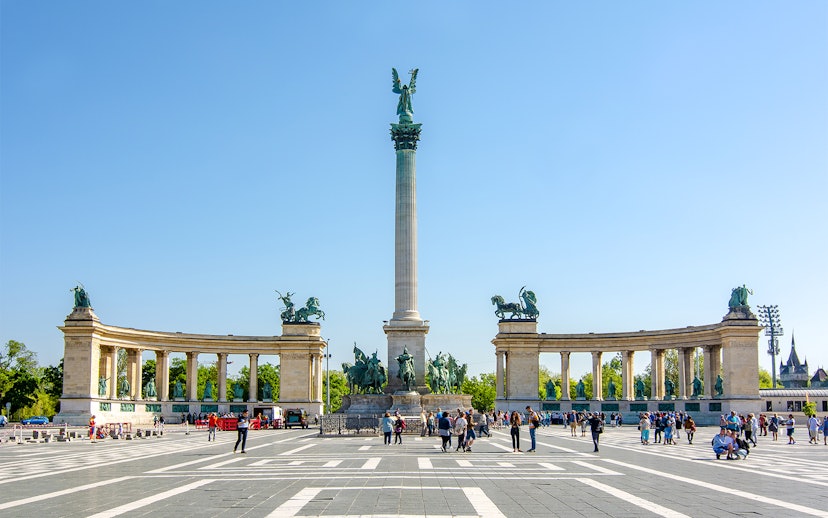
Budapest: 3-Hour Grand City Tour and Castle Walk

3-hour guided Budapest city tour + AC bus transfers + Castle Hill walking tour + photo stops at Heroes’ Square and Castle Hill + multilingual live guide

A first-time Budapest visit where you want the city’s biggest landmarks, viewpoints, and Castle Hill highlights covered in one smooth guided tour

From €40

How do you get around Buda Castle?

Buda Castle is best explored on foot, and the route feels larger than it looks because the hill mixes open courtyards, museum wings, terraces, and cobbled connectors. The main palace mass sits south of Szent Gyorgy ter, so it helps to orient yourself there before heading deeper into the complex.

Key areas

  • Szent Gyorgy ter: Arrival point for buses and many walking routes → start here to decide between courtyards, the Gallery, or the southern museum wing → 15–20 min.
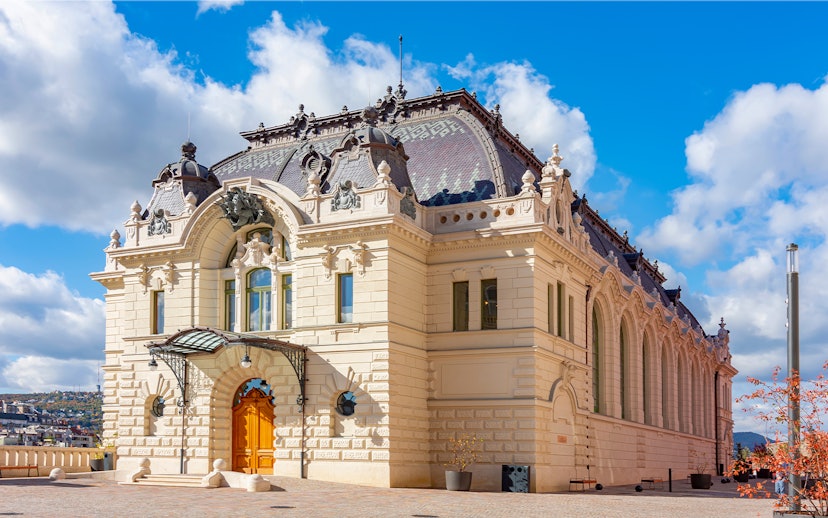
  • Palace courtyards and Savoy Terrace: Baroque facades, statues, and open viewpoints → best for your first overview of the complex → 20–30 min.
  • Hungarian National Gallery side: Major art collections + Dome Terrace access → the strongest mixed indoor-outdoor stop → 2–3 hr.
  • Budapest History Museum side: Medieval remains and city-history collections → quieter and more time-heavy than many visitors expect → 1–2 hr.

Suggested route: Start at Szent Gyorgy ter, do the outdoor courtyards first while your legs are fresh, then enter 1 museum before crossing the whole hill; most visitors waste time zigzagging between wings after already descending toward the Bastion side.

Maps and navigation tools

  • Map: On-site museum maps and district orientation boards cover the palace wings best → grab one before entering your first museum.
  • Signage: Good enough for the big courtyards, but not intuitive between separate wings, terraces, and museum entrances → a downloaded map genuinely helps.
  • Audio guide/app: Museum audio guides are available in multiple languages → worth it if you’re visiting the Gallery or History Museum without a live guide.
  • Outdoor navigation: Offline maps are useful on Castle Hill because the route names, slopes, and stair links aren’t obvious once you leave the main square.

💡 Pro tip: Choose your museum before you start wandering the courtyards as once you drift toward the Bastion side, it’s easy to lose 20–30 minutes doubling back across the hill.

What is Buda Castle worth visiting for?

Hungarian National Gallery inside Buda Castle
Budapest History Museum in Buda Castle
Dome Terrace view over the Danube
Hauszmann Story exhibition at Buda Castle
Savoy Terrace and palace courtyards
Buda Castle Labyrinth underground passageways
1/6

Hungarian National Gallery

Hungarian art from the Middle Ages to the 20th century

This is the castle’s strongest indoor stop, and it turns the visit from a scenic walk into a true cultural half-day experience. The collection is broad, but what most visitors rush past is how well the palace setting frames the art, especially in the older national rooms and the terrace access above.

Where to find it: In the central-western palace wings inside the main Buda Castle complex

Budapest History Museum

Roman, medieval, Ottoman, and modern Budapest history

If you want the palace to make historical sense, this is the stop that does it. The most rewarding detail many visitors miss is the lower-level medieval material and surviving palace remains, which are easy to overlook if you only skim the upper galleries.

Where to find it: Building E in the southern wing of the palace

Dome Terrace

Rooftop viewpoint/palace architecture

The Dome Terrace gives you one of the best elevated views in the entire complex, especially across the Danube toward Parliament. Many people miss it because they treat the National Gallery as purely an indoor museum and never continue upward.

Where to find it: Accessed through the Hungarian National Gallery; closed in winter

The Hauszmann Story

Turn-of-the-20th-century palace history

This free multimedia exhibition adds the palace backstory that the courtyards alone can’t give you. It often gets skipped because visitors head straight for the paid museums, but it’s one of the easiest ways to understand how the royal complex once looked and functioned.

Where to find it: Building A within the Buda Castle complex

Palace courtyards and Savoy Terrace

Baroque exterior architecture and public viewpoints

These open spaces are what make Buda Castle feel grand even if you never buy a museum ticket. Most visitors stop for a quick photo and move on, but the lower terraces are worth lingering on because the Danube-facing angles improve as you move away from the busiest railings.

Where to find it: Across the main outdoor palace forecourts and terraces south of Szent Gyorgy ter

Buda Castle Labyrinth

Medieval cellars and underground passageways

This is the castle’s most atmospheric add-on, especially if you’ve already done the big views and want something moodier. What people don’t realize is that it’s an advance-booking experience, not a spontaneous walk-in stop, so last-minute planners often miss it entirely.

Where to find it: In the underground cellar network beneath Castle Hill, reached via guided access points

Facilities and accessibility

  • 🍽️ Cafes: You’ll find cafes around Szent Gyorgy ter and nearby Castle Hill streets, and they work well for a coffee or light lunch between museum stops rather than as a destination meal.
  • 🎧 Audio guides: Audio guides are available at the museums in multiple languages, which is useful here because the palace complex is harder to interpret from signs alone.
  • 🚠 Funicular access: The Castle Hill Funicular is both a practical ride and part of the experience, and it’s the easiest paid way to skip the steepest uphill stretch from Clark Adam ter.
  • 🛗 Elevators/escalators: The Varkert Bazar route offers free elevator and escalator access up the hill, which can be more practical than the funicular if you’re avoiding queues.
  • 🅿️ Parking: Parking on Castle Hill is very limited, so this is not a place to plan around driving unless you have a very specific reason to do so.
  • Mobility: Access is partial rather than seamless because Castle Hill includes cobbles, slopes, and stair-heavy links, though the funicular and Varkert Bazar lifts reduce the hardest climb.
  • 👁️ Visual impairments: Museum audio guides and English signage help with context inside the main collections, but the outdoor palace complex still relies heavily on visual orientation.
  • 🧠 Cognitive and sensory needs: Tuesday and Wednesday mornings are the easiest low-stimulation windows, while summer midday can feel crowded and noisy around the funicular, terraces, and Bastion-facing routes.
  • 👨‍👩‍👧 Families and strollers: Strollers are manageable on the main hill routes if you use the funicular or lift-assisted approach, but the route is not pushchair-friendly end to end because of uneven cobbles and inclines.

Buda Castle works well with children if you treat it as a mix of open-air exploring, big views, and 1 well-chosen indoor stop rather than a museum marathon.

  • 🕐 Time: 2–3 hours is realistic with young children if you focus on the courtyards, views, and 1 museum or the funicular ride.
  • 🏠 Facilities: The open courtyards and terraces give kids room to reset between indoor sections, which matters more here than trying to power through both main museums.
  • 💡 Engagement: Turn the visit into a lookout game by spotting Parliament, the Chain Bridge, and the river from different terraces instead of asking children to absorb every room.
  • 🎒 Logistics: Bring a small day bag, not a bulky stroller setup, and use the funicular or Varkert Bazar access route to skip the most tiring uphill section.
  • 📍 After your visit: Fisherman’s Bastion is the easiest child-friendly follow-on nearby because the turreted terraces feel playful and the walk from the castle stays short.

Rules and restrictions

What you need to know before you go

  • Entry requirement: The palace courtyards and terraces are free, but the Hungarian National Gallery and Budapest History Museum each need their own paid ticket.
  • Booking method: Buy guided tours and underground or cellar-style experiences in advance, because these are the parts of the castle visit most likely to sell out.
  • ID: Bring ID if you’re using a youth or senior discount, because reduced museum admission is tied to age-based concessions.
  • Bag policy: Travel light on Castle Hill, because cobbles, slopes, and separate museum entrances make large bags more trouble than they’re worth.
  • Re-entry policy: The open castle grounds are flexible, but don’t build your day around leaving and re-entering museum wings unless your ticket conditions say so.

Not allowed

  • 🚫 Food and drink: Save snacks and drinks for the outdoor courtyards or cafés, not the museum galleries.
  • 🚬 Smoking/vaping: Smoke or vape only away from museum interiors and busy public palace routes.
  • 🐾 Pets: Pets are best kept to the outdoor district, while indoor museum access is generally limited to service animals.
  • 🖐️ Touching/climbing: Don’t touch exhibits or climb on historic walls and terrace edges, because this is an active heritage site as well as a viewpoint.

Photography

Photography is generally allowed in permanent museum exhibits without flash, and the outdoor courtyards and terraces are some of the best photo spots on the hill. The distinction matters more indoors than outdoors: museum staff can restrict photography rules in specific rooms or temporary displays, so don’t assume every exhibition follows the same policy. Flash-free shooting is the safe default, and large equipment is a bad fit on crowded indoor routes.

Good to know

  • Mondays catch people by surprise: While the Castle District is still beautiful to explore on foot, the 2 main indoor museums are closed, so it’s not the best day to plan a full culture-focused visit.
  • Separate museums mean separate planning: There isn’t a single all-in-one museum pass for the main palace institutions, so a full day here needs more ticket planning than many visitors expect.

Practical tips

  • Booking and arrival: Book guided walks and underground tours as soon as your dates are fixed, especially for July and August, because these are the parts of the Buda Castle visit most likely to sell out weeks ahead.
  • Pacing: Save the longer indoor museum stop for after you’ve done the open courtyards and terraces; once you’ve gone deep into the Gallery or History Museum, the outdoor hill loop feels longer on tired legs.
  • Crowd management: Tuesday and Wednesday before 11:30am are the sweet spot here because you get ahead of both the funicular queues and the midday wave coming over from Fisherman’s Bastion.
  • What to bring or leave behind: Bring a small bag and shoes you trust on cobbles, because Castle Hill involves more sloped walking and stair transitions than the pretty skyline photos suggest.
  • Food and drink: Either eat before coming up or wait until after your first museum stop; breaking for lunch too early usually means rejoining the busiest part of the hill right at midday.
  • Route planning: Decide in advance whether you want views only, the National Gallery, the History Museum, or both, because wandering first and choosing later creates the most unnecessary backtracking here.
  • Monday timing: Monday is good for a quieter exterior walk and viewpoints, but it’s the wrong day if your priority is the 2 main museums inside the palace.

What else is worth visiting nearby?

Commonly paired

Matthias Church
Distance: 700 m, a 10 min walk
Why people combine them: It’s the most natural same-hill pairing because the church gives you the richly decorated interior that Buda Castle’s courtyards don’t, without adding another transit leg.

Commonly paired

Fisherman’s Bastion
Distance: 800 m, a 10–12 min walk
Why people combine them: It extends the castle’s best panoramic views and turns a museum-heavy route into a more balanced Castle District half-day.

Also nearby

Chain Bridge
Distance: 1 km, a 15 min downhill walk
Worth knowing: It’s the cleanest way to continue into Pest after your castle visit, especially if you want Parliament-facing photos on the way down.

Hospital in the Rock
Distance: 900 m, a 12 min walk
Worth knowing: This is the strongest nearby add-on if you want another history stop with a very different mood from the palace museums above ground.

Eat and stay near Buda Castle

  • On-site: The cafes around Szent Gyorgy ter are convenient for coffee, cake, and a light lunch, but they make more sense as a timing break than a destination meal.
  • Pro tip: If you want a quieter lunch, eat before 12 noon or after 2pm; the hill’s café lines swell once funicular riders and midday walking tours overlap.

Staying near Buda Castle is worth it if you want quiet evenings, easy sunrise or after-dark views, and the atmosphere of Castle Hill once day-trippers leave. It is less practical if this is your first Budapest trip and you want faster access to nightlife, broad restaurant choice, and the city’s main transit connections. The area suits shorter, slower-paced stays better than a busy city-break base.

  • Price point: The area skews mid-range to high-end, with fewer budget options than central Pest.
  • Best for: Travelers who want to walk to the castle early, photographers chasing blue-hour views, and anyone who values atmosphere over convenience.
  • Consider instead: District V or the Deak Ferenc ter area if you want easier transit, more dining choice, and a better base for a first stay in Budapest.

Frequently asked questions about visiting Buda Castle

Most visitors need 2–4 hours at Buda Castle. That covers the courtyards, terraces, and 1 major museum at a comfortable pace. If you visit both the Hungarian National Gallery and the Budapest History Museum, or add Matthias Church and Fisherman’s Bastion nearby, the visit easily becomes a half-day.