Visiting Memento Park Budapest: your guide
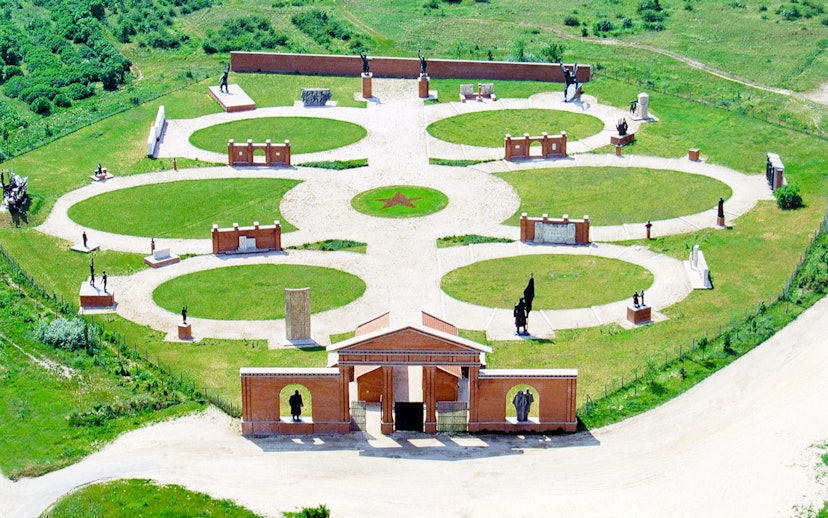
Memento Park is an open-air museum best known for its giant Communist-era statues, removed from Budapest after 1989. While the visit is shorter than many people expect, it becomes far more rewarding if you approach it as a historical walk rather than a quick photo stop. The biggest difference between a routine visit and a memorable one is taking the time to explore the indoor film and exhibition, not just the outdoor monuments. This guide covers timing, tickets, entrances, and how best to plan your route.
Quick overview: Memento Park at a glance
This is the kind of attraction that rewards good timing and context more than rushing through it.
- When to visit: Open year-round, typically 10am–6pm in warmer months and 10am–4pm in winter. The first hour after opening is noticeably calmer than 11:30am–1pm, because that’s when the direct shuttle and most weekend groups tend to arrive.
- Getting in: General admission starts at around €9, and you can usually buy your ticket on the day you visit, depending on availability.
- How long to allow: 1–1.5 hours for most visitors. It stretches closer to 2 hours if you read the plaques, watch the secret-police film, and spend time in the photo exhibition.
- What most people miss: The hidden statues and fragments behind Stalin’s Boots, plus the indoor ‘Stalin’s Boots’ exhibition that explains why these monuments matter.
Jump to what you need
🕒 Where and when to go
🎟️ Which ticket is right for you?
🗺️ Getting around
🗿 What to see
♿ Facilities and accessibility
Where and when to go
How do you get to Memento Park?
Memento Park sits in Budapest’s 22nd district on the south-western edge of the city, about 10km from the center and is easiest to reach via Kelenfold or the direct shuttle from Deak Ferenc ter.
- Direct shuttle: Deak Ferenc ter → about 30 min → easiest if you want a no-transfer ride and a simple return.
- Metro + bus: M4 to Kelenfold + bus 101B, 101E, or 150 → about 45–55 min total → get off at the ‘Memento Park’ stop right by the entrance.
- Taxi/rideshare: Central Budapest → about 20–25 min → best if you’re short on time or splitting the fare.
- Driving: Free on-site parking → easiest via the M1/M7 approach roads → useful if you’re pairing the park with southern Buda stops.
Which entrance should you use?
There’s just one public entrance, and the only thing visitors usually get wrong is assuming there are multiple gates once they see the outer walls and parking area.
- Main entrance: Located beside the ticket office on the Balatoni ut side.
- Wait time: Expect little to no wait on most days, and around 5–10 min at busier weekend arrival windows.
When is Memento Park open?
- March–October: 10am–6pm
- November–February: 10am–4pm
- Last entry: Arrive at least 60 min before closing if you want time for the indoor film and exhibition.
When is it busiest? Summer weekends are the busiest overall. Year-round, it also gets noticeably busier between around 11:30am and 1pm, when shuttle arrivals and guided tour groups tend to overlap.
When should you actually go? Go right at opening if you want the statues nearly to yourself and cleaner photo angles before the first shuttle visitors arrive.
Which Memento Park ticket is best for you
| Ticket type | What's included | Best for | Price range |
|---|---|---|---|
General admission | Entry to Memento Park + access to The Most Cheerful Barrack + access to Stalin's Grandstand | A self-paced visit without a fixed tour time | From €9 |
How do you get around Memento Park?
Memento Park is best explored on foot, and most visitors can comfortably cover it in 1–1.5 hours without needing to double back too much. The main focal point is right at the entrance, where the Lenin, Marx, and Engels statues set the tone before the route opens into the wider monument field.
- Entrance statues: Lenin, Marx, and Engels grouped together → 10–15 minutes for photos and the first context plaques.
- Main statue park: The largest cluster of Communist-era monuments and propaganda sculptures → 35–45 minutes if you stop to read the signage.
- Stalin’s Grandstand: Replica tribune and giant boots → 10 minutes, plus extra time if you look for the tucked-away fragments behind it.
- Witness Square: Indoor exhibition hall and barracks cinema → 20–30 minutes if you watch the film and read the photo displays.
Suggested route: Start with the entrance trio, loop through the main statue field, then climb Stalin’s Grandstand, and finish at Witness Square. Most people visit the indoor exhibition too early, then end up rushing the outdoor monuments or missing the hidden pieces behind the boots.
Maps and navigation tools
- Map: On-site brochure and guidebook → covers the statue layout and basic monument context → pick it up at the ticket desk before you walk in.
- Signage: Good enough for a basic self-guided loop, but a printed guide makes the visit far more meaningful than the labels alone.
- Audio guide/app: There’s no widely used in-park audio system, so the guidebook is the better add-on if you want more context.
- Large outdoor POIs only: The paths are straightforward, but the hidden fragments near Stalin’s Grandstand are easy to miss without slowing down.
💡 Pro tip: Pick up the guidebook before you step outside otherwise the statues can blur together faster than you expect.
What is Memento Park worth visiting for?

Lenin, Marx, and Engels at the entrance
Era: Communist Hungary, 1949–1989
These oversized figures are your first reminder that this isn’t just a sculpture park, it’s a collection of symbols once used to shape public life. Most visitors stop for photos and move on too quickly, but the plaques explaining where these statues originally stood make the opening moments much more meaningful. In the softer morning light, this is also one of the best photo spots in the park.
Where to find it: Immediately inside the main entrance, before the path opens into the wider monument field
Stalin’s Grandstand and Boots
Type: Symbolic reconstruction of a destroyed dictatorship monument
This replica grandstand and the giant bronze boots reference the Stalin statue that was torn down during the 1956 uprising, and it is the single most loaded image in the park. Most visitors climb up, take the obvious photo, and leave, but the less obvious fragments behind the structure are part of what make this stop so memorable. It is one of the few places where the politics of removal feel as powerful as the monument itself.
Where to find it: Toward the rear of the main outdoor park, on the raised platform visible across the site
The main statue field
Collection: 42 monuments and plaques from Hungary’s Communist period
This is the core of the visit: heroic workers, Soviet soldiers, party leaders, and propaganda-heavy public art all gathered in one neutral setting. What makes it worth slowing down for is the contrast between scale and context. These were once central, commanding city monuments, not museum pieces. Most visitors don’t realize how much stronger the walk becomes if you read even a handful of the location notes instead of treating the sculptures as backdrop.
Where to find it: The fenced central paths that loop out from the entrance area
The ‘Stalin’s Boots’ exhibition hall
Format: Indoor photo and history exhibition
This compact exhibition connects the statues outside to the 1956 revolution, the collapse of Communist rule, and the creation of the park itself. It’s easy to miss because the outdoor monuments dominate attention, but this is where the site starts to make historical sense. The black-and-white photographs of statues being removed are the detail many visitors remember most afterward.
Where to find it: In Witness Square, inside the brick exhibition space near the indoor visitor buildings
Barrack cinema and ‘The Life of an Agent’
Format: Documentary film with English subtitles
The short film built from secret-police training footage is one of the most unsettling parts of the visit, and it adds a layer the statues alone can’t provide. Most people underestimate it because the room is small and plain, but the content is what gives the broader park its edge. If you skip it, the site can feel more quirky than serious.
Where to find it: In the barracks-style building beside the exhibition hall in Witness Square
Facilities and accessibility
- 🚻 Restrooms: Basic restrooms are available near the entrance buildings, so it’s easiest to use them before heading into the outdoor monument field.
- 🛍️ Gift shop/merchandise: The Red Star Store sits near the entrance and is worth a stop for Cold War memorabilia, posters, pins, and offbeat souvenirs.
- 🪑 Seating/rest areas: Seating is limited, so this is a stand-and-walk visit more than a museum where you’ll find frequent benches.
- 🅿️ Parking: There is free on-site parking, which makes driving the simplest option if you’re pairing the park with other southern Buda stops.
- 🚗 Photo prop/Trabant: A vintage Trabant is often one of the most photographed details on-site, and it’s part of the park’s lighter, more experiential side.
- ♿ Mobility: The park is not barrier-free, and gravel paths, uneven ground, and stairs around the grandstand make parts of the route difficult for visitors using wheelchairs or with limited mobility.
- 👁️ Visual impairments: The visit relies heavily on visual interpretation, and while English plaques help with context, there is no strong in-park audio system to replace the visual material.
- 🧠 Cognitive and sensory needs: The outdoor setting is usually calm and uncrowded, but the secret-police film can feel intense and unsettling for some visitors.
- 👨👩👧 Families and strollers: Strollers are possible on the main paths, but the rougher ground and steps mean it’s not a smooth pushchair-friendly route from start to finish.
Memento Park works best for older children and teens who can connect the statues to real history, while younger kids usually treat it as a short outdoor walk with a few unusual photo stops.
- 🕐 Time: Around 45–60 min is realistic with younger children, and the best parts to prioritize are the entrance statues, Stalin’s Boots, and the Trabant photo stop.
- 🏠 Facilities: Family facilities are limited, so plan around the entrance restrooms and don’t expect playgrounds, cafes, or long rest areas.
- 💡 Engagement: Turn the visit into a ‘spot the propaganda’ game, kids usually engage better when you ask them what each statue was trying to communicate.
- 🎒 Logistics: Bring water, sun protection, and a stroller only if you’re comfortable handling uneven paths; late morning works better than the hottest midday summer window.
- 📍 After your visit: Tropicarium near Campona is the easiest family-friendly follow-up if you want something lighter after the park’s heavier history.
Rules and restrictions
What you need to know before you go
- Entry requirement: You’ll need a valid ticket or Budapest Card redemption at the entrance desk before entering the park.
- Bag policy: Small day bags are the easiest fit here, because there’s no widely used locker setup and you’ll be walking on uneven outdoor paths.
- Re-entry policy: Standard admission is single-entry, so plan your restroom stop and gift-shop browse before you leave the grounds.
- Dress note: There’s no formal dress code, but this is a fully outdoor site with gravel paths and little shade, so closed-toe shoes and weather protection help.
Not allowed
- 🐾 Pets off leash: Dogs and other pets are welcome, but they need to stay on a leash throughout the visit.
- 🖐️ Climbing on monuments: Keep off the statues themselves, because the surfaces and bases are uneven and preservation matters here.
Photography
Casual photography is part of the experience, especially in the outdoor statue field, around Stalin’s Boots, and by the Trabant. Handheld cameras and phones are the easiest fit. If you’re planning a more elaborate shoot with larger equipment, it’s worth checking with staff first, because the indoor exhibition spaces are small and the site functions more like a museum than an open public square.
Good to know
- Budapest Card: Even if your entry is covered, you still need to redeem your free admission at the ticket desk.
- Film content: The short barracks film is one of the best parts of the visit, but its secret-police footage can feel heavier than the outdoor setting suggests.
Practical tips
- Booking and arrival: You usually don’t need to book standard entry far ahead. General admission is flexible, while tours run at fixed times.
- Pacing: Don’t spend all your energy outside in the first 30 minutes; save 20–30 minutes for the indoor exhibition and film, because that’s what turns a statue walk into a real history visit.
- Crowd management: The best slot is right at opening, not just because it’s quieter, but because you’ll beat the late-morning shuttle arrivals that make the photo angles around Lenin and Stalin’s Boots feel busier.
- What to bring or leave behind: Bring water, sunscreen, and a light layer; there’s very little shade in summer, and the open layout feels hotter and windier than central Budapest.
- Food and drink: Eat before you come or plan lunch afterward, because there isn’t a full cafe on-site and the park works best as a focused 1–2 hour stop rather than a place to linger over a meal.
- Context: Buy the inexpensive guidebook at the entrance if you are visiting without a guide. Without it, the monuments can start to blur together more quickly than most visitors expect.
What else is worth visiting nearby?
Commonly paired: House of Terror Museum
Distance: About 12km - 30–35 min by taxi or transit
Why people combine them: It’s the most natural same-day pairing if you want both the public symbols of Communist rule and the darker story of how the system worked in everyday life.
Commonly paired: Hospital in the Rock
Distance: About 13km - 35–40 min by taxi or transit
Why people combine them: Both sites deepen Budapest’s 20th-century story, but in very different ways - one through propaganda monuments, the other through underground wartime and Cold War infrastructure.
Also nearby
Tropicarium
Distance: About 2.5km - 5–10 min by taxi or a short bus hop
Worth knowing: It’s the easiest family-friendly contrast to Memento Park if you want something lighter nearby after a history-heavy visit.
Campona Shopping Mall
Distance: About 2.5km - 5–10 min by taxi or a short bus hop
Worth knowing: This is the practical nearby stop for lunch, groceries, or a short break before heading back toward central Budapest.
Eat, shop and stay near Memento Park
- On-site: There’s no cafe at the park, so Memento Park works best after breakfast or before lunch rather than as a meal stop.
- Campona Shopping Mall food court: 5–10 min by taxi, Campona area; the most practical nearby option if you want a quick meal without going all the way back to the center.
- Kelenfold station cafes: 15–20 min by bus, station concourse; useful if you’re returning by public transit and want coffee or a fast bite before your next stop.
- Deak Ferenc ter cafes: About 30 min by shuttle, central Budapest; better for a proper post-visit meal if you’d rather pair the park with lunch back in the city.
- 💡 Pro tip: If you take the late-morning shuttle out, eat before you go otherwise you’ll lose the quietest hour of the visit to lunch logistics.
- Red Star Store: The on-site gift shop near the entrance is the most distinctive place to buy Communist-era souvenirs, posters, pins, and conversation-starting memorabilia.
- Campona Shopping Mall: If you need practical shopping rather than niche souvenirs, this is the closest full retail option after your visit.
This is not the best base for most Budapest trips. The area around Memento Park is suburban, quiet, and practical rather than atmospheric, and most travelers are better off staying in the center and treating the park as a half-day outing. It only really suits you if you’re driving, already exploring southern Buda, or want the simplest possible access for an early visit.
- Price point: The wider area generally skews more practical than stylish, with better value than central Budapest but far less character.
- Best for: Travelers with a car, repeat visitors exploring beyond the center, and anyone who wants to combine Memento Park with southern Buda or family stops like Tropicarium.
- Consider instead: Stay near Deak Ferenc ter, District V, or District VI if you want easier access to Budapest’s main sights, dining, and evening atmosphere.
Frequently asked questions about visiting Memento Park
Most visits take 1–1.5 hours. If you read most of the plaques, spend time in the indoor photo exhibition, and watch the secret-police film, you could easily stay closer to 2 hours.
No, you usually don’t need to book standard entry in advance. Memento Park is rarely crowded enough to sell out, so many visitors buy tickets on the day, though weekend guided tours are worth reserving ahead.
You don’t need to arrive early for standard admission because there’s no strict timed-entry system. If you’ve booked a guided tour, get there about 15 minutes early so you have time to check in and pick up your ticket.
The simplest public-transit route is metro line M4 to Kelenföld, then bus 101B, 101E, or 150 to the ‘Memento Park’ stop. If you want less hassle, the direct shuttle from Deák Ferenc tér or a taxi cuts the journey down and removes the transfer.
Yes, a small bag or backpack is fine. Just pack light, because this is an outdoor visit with uneven ground, and there isn’t a widely used locker setup that makes bulky luggage convenient.
Yes, casual photography is a normal part of the visit and one of the reasons people come. Phones and handheld cameras work best, especially outdoors, while larger setups are better cleared with staff first if you’re planning anything beyond regular sightseeing photos.
Yes, and the park works particularly well for groups interested in history, politics, or photography. If your group wants more than a photo walk, a guided visit adds far more value because the stories behind the statues are what make the site stick.
Yes, but it suits older children and teens better than very young kids. Younger visitors usually enjoy the giant statues and the Trabant photo stop, while the historical context and the secret-police film land better with children who already know some 20th-century history.
No, not fully. The grounds have gravel paths, uneven terrain, and stairs around key parts of the visit, so it is not barrier-free and can be difficult for visitors with limited mobility.
There isn’t a full café on-site, so it’s smarter to eat before or after your visit. The closest practical food options are around Campona or back near Kelenföld and central Budapest.
Yes, there is enough English on-site signs to follow the visit without guessing. The plaques, indoor exhibition captions, and film subtitles make the park manageable for English-speaking visitors, though a guide or guidebook adds much more depth.
Yes, general admission is included with the Budapest Card. You still need to stop at the ticket desk to redeem your entry, so don’t walk straight through the gate expecting card-only access.