An Opera House engineered for excellence

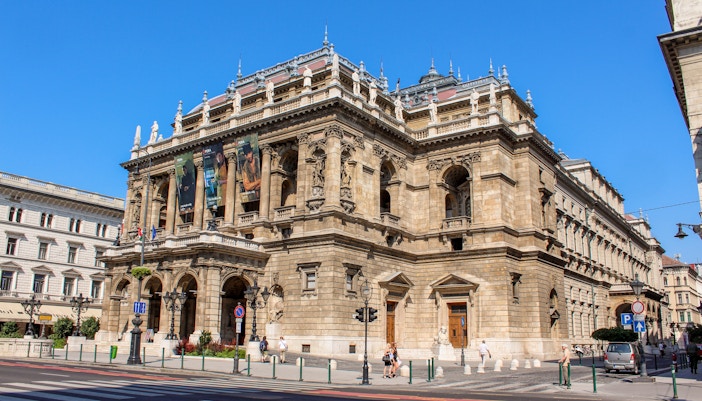
Opened in the 19th century as a statement of cultural independence, the Hungarian State Opera was built with an obsessive focus on performance quality, from carefully calibrated acoustics to sightlines that keep the stage visually intimate from every seat. This precision allows singers and orchestras to perform at full expressive range without amplification, creating a clarity few modern venues can match. Combined with elite productions and behind-the-scenes access through guided tours, it offers one of the most authentic ways to experience Budapest’s cultural depth.

Inside the Hungarian State Opera

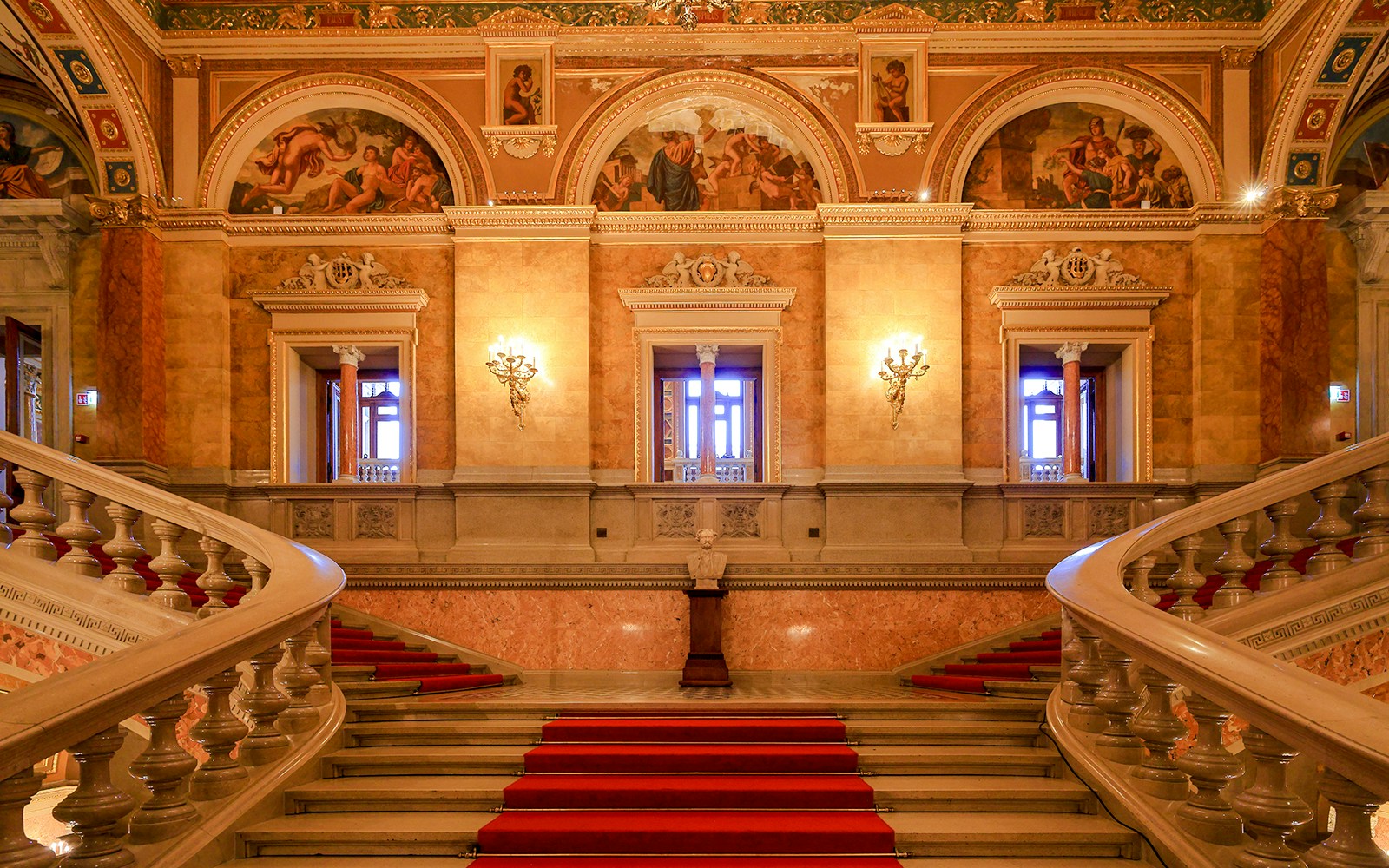
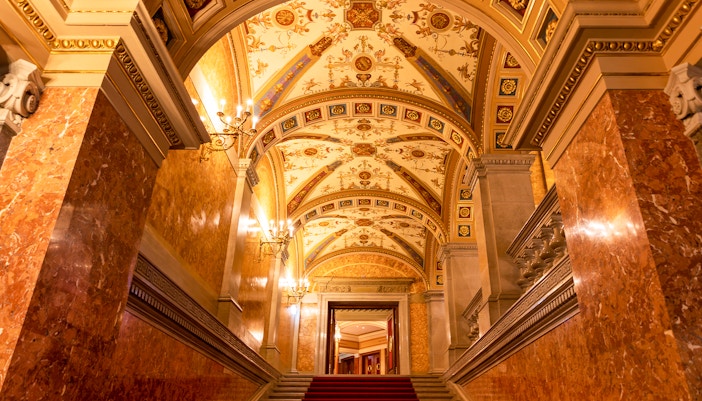
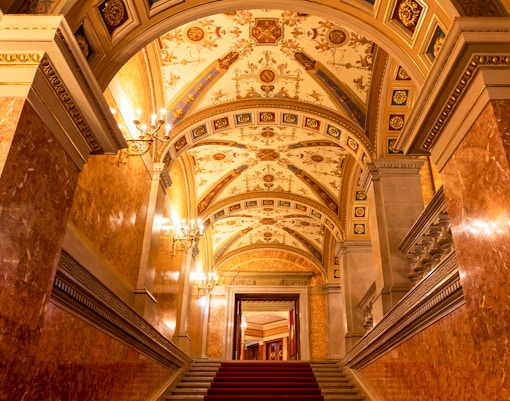
Grand staircase and ornate hallway inside the Hungarian State Opera, Budapest.
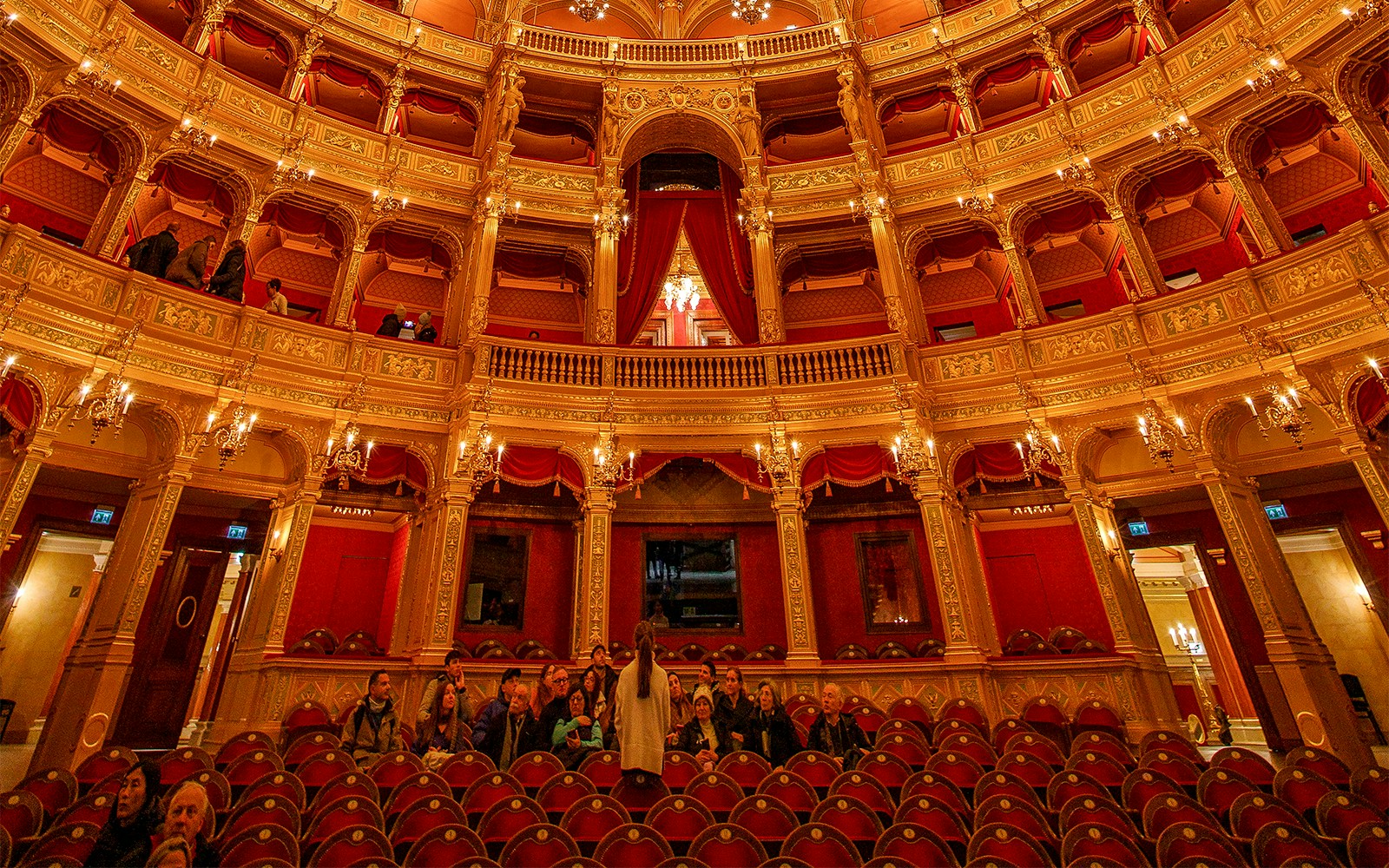
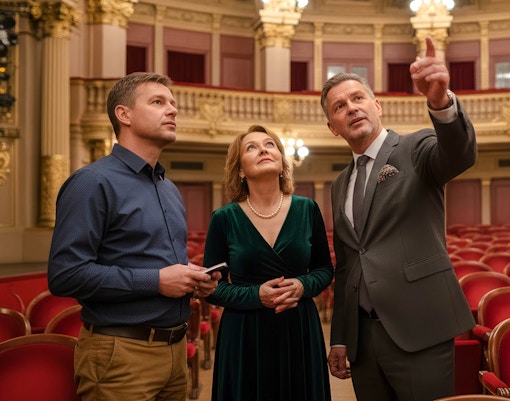
Guests with tour guide inside the ornate Hungarian State Opera House.
Guests and tour guide inside the ornate Hungarian State Opera House.
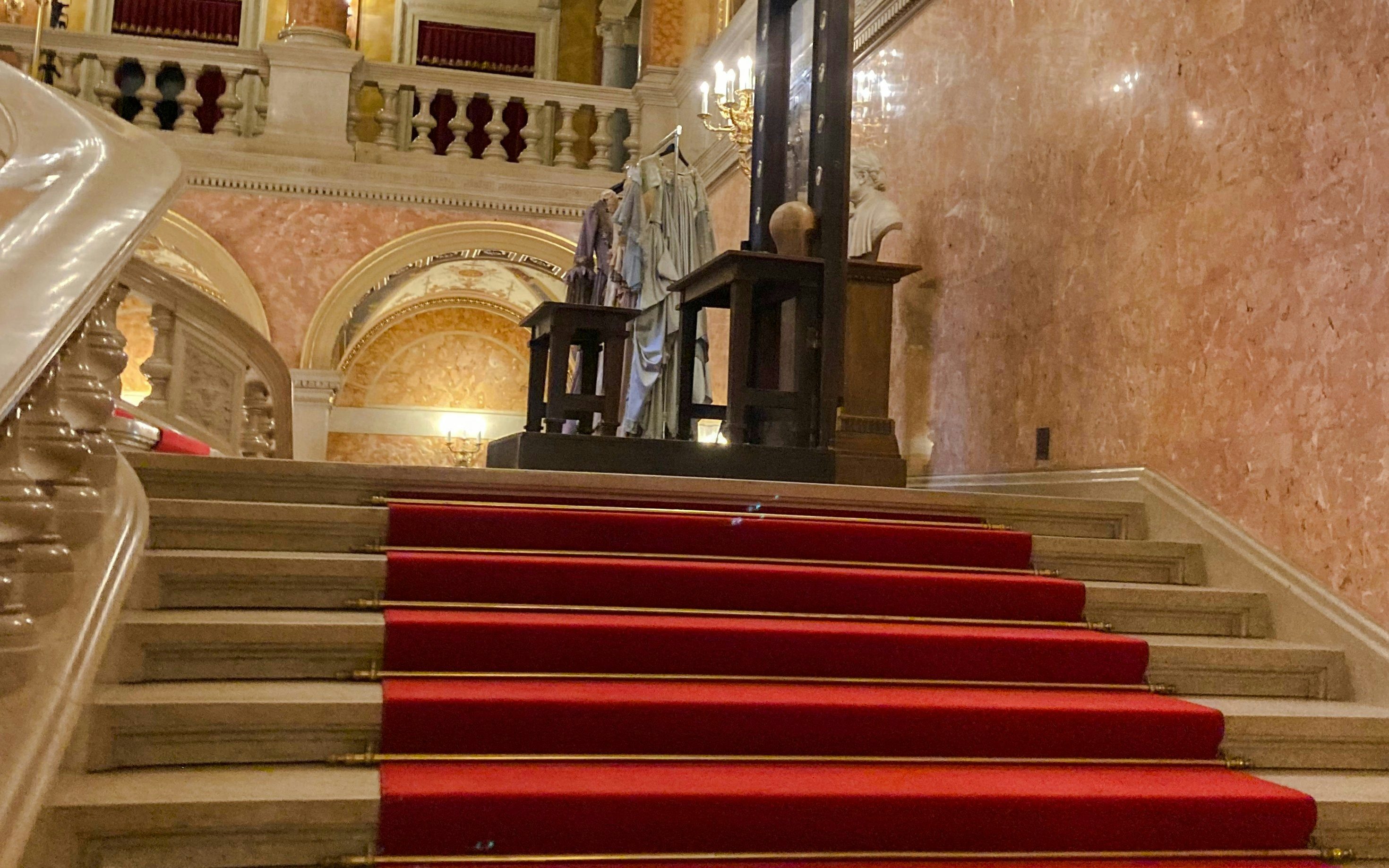
Grand Staircase with red carpet in Hungarian State Opera, Budapest.
1/4

The Grand Staircase and frescoed foyers

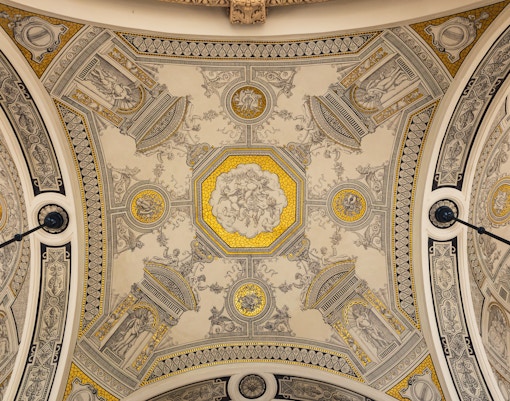
Designed to impress before a single note is played, the ceremonial staircase and richly frescoed foyers reflect Budapest’s late-19th-century cultural ambition. These spaces were intended as social theaters in their own right, where the city’s elite gathered and displayed status.

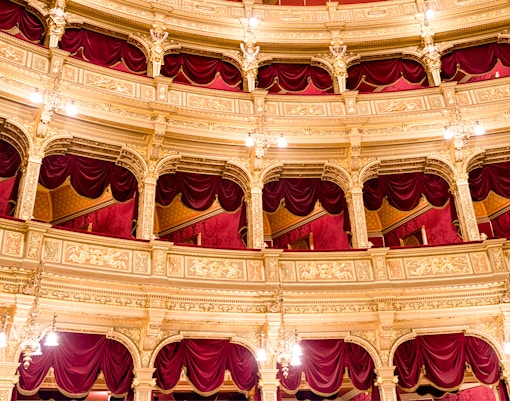
The horseshoe-shaped auditorium

The auditorium’s classic horseshoe design is a deliberate acoustic choice that delivers remarkable sound clarity from every level. Gilded details, velvet seating, and intimate proportions place audiences unusually close to the stage. It’s a masterclass in how design serves performance rather than spectacle alone.

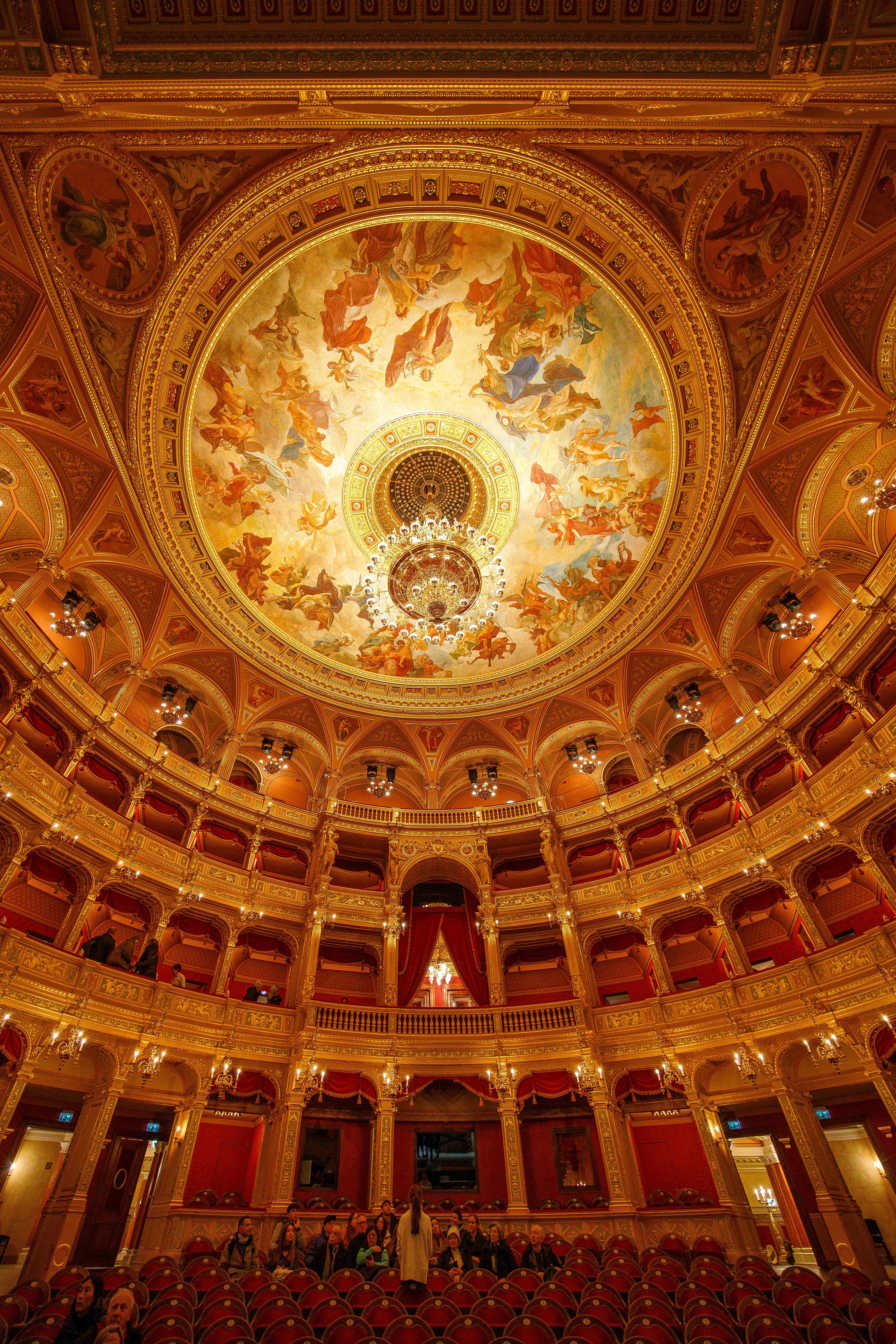
The ceiling fresco and chandeliers

The ceiling reveals a fresco celebrating music and mythology, framed by one of Europe’s most striking opera house chandeliers. More than ornamentation, this artwork reinforces the Opera House’s identity as a temple of high culture rather than simple entertainment. It remains one of the most photographed interiors in Budapest for good reason.

The stage and backstage areas

The Hungarian State Opera guided tours provide access to rehearsal rooms, costume workshops, and stage machinery rarely seen by audiences. These behind-the-scenes spaces reveal the technical discipline and craftsmanship required to sustain a historic venue at a world-class level.
A century and a half on the Hungarian stage

  • 1875: Construction of the Hungarian State Opera begins under architect Miklós Ybl, commissioned as part of Budapest’s transformation into a modern European capital.
  • 1884: The Opera House opens on September 27, 1884, attended by Emperor Franz Joseph I, immediately establishing itself as Hungary’s premier operatic venue.
  • 1888 to 1891: Composer Gustav Mahler serves as music director, raising performance standards and integrating international repertoire while shaping the Opera House’s artistic discipline.
  • Early 20th century: The Opera House becomes a central platform for Hungarian-language opera and ballet, reinforcing national cultural identity through performance.
  • 1945: During the Siege of Budapest, the building sustains structural damage, temporarily halting performances and placing the Opera House’s future at risk.
  • 1951: After extensive repairs, the Opera House reopens, resuming its role as a state-supported cultural institution in postwar Hungary.
  • 1984: A major restoration coincides with the building’s 100th anniversary, modernizing stage technology while preserving historical interiors and acoustics.
  • 2002: The Opera House becomes part of a UNESCO World Heritage Site when Andrássy Avenue and its historic surroundings receive official inscription, recognizing its place along Budapest’s most significant 19th-century boulevard.
  • 2017 to 2022: The Opera House undergoes its most extensive renovation to date, upgrading infrastructure, restoring original design elements, and meeting modern safety and performance standards.
  • 2022: The fully restored Opera House reopens to the public, reaffirming its status as one of Europe’s most acoustically refined and historically significant opera houses.

Miklós Ybl, the mind behind the Opera House

The State Opera is designed by Miklós Ybl, one of Hungary’s most influential 19th-century architects, commissioned during a period of intense national self-definition. Known for combining technical discipline with refined ornamentation, Ybl approaches the project as both a national commission and a defining test of his craft. The result is an opera house that gives equal weight to acoustics, proportion, and practical performance needs alongside visual grandeur.

Design built around the human voice

Neo-Renaissance form and proportion

The Opera House is designed in a Neo-Renaissance style, characterized by symmetrical facades, arched windows, and classical proportions drawn from Italian Renaissance models. Decorative elements are applied selectively, concentrating ornamentation around entrances, windows, and cornices rather than across large structural surfaces.

Auditorium geometry and sound distribution

The auditorium is proportioned to optimize sound projection, with curved walls and a horseshoe-shaped layout that distributes unamplified voices evenly. Hard materials such as plaster, wood, and stone dominate interior surfaces to reduce sound absorption.

Interior scale and seating layout

Although the exterior presents a formal, ceremonial scale, the interior volumes remain comparatively compact. Seating is arranged in stacked tiers that maintain direct sightlines while minimizing distance between audience and stage.

Structural ornamentation and decorative systems

Decorative features such as columns, arches, and relief panels are integrated into the building’s structure rather than applied superficially. These elements shape the interior visually while also influencing acoustics and circulation.

Frequently asked questions about Hungarian State Opera House

It is built to assert Hungary’s cultural independence within the Austro-Hungarian Empire and to rival Europe’s leading opera houses in artistic quality.

More reads

Hungarian State Opera House tickets

Hungarian State Opera House opening hours

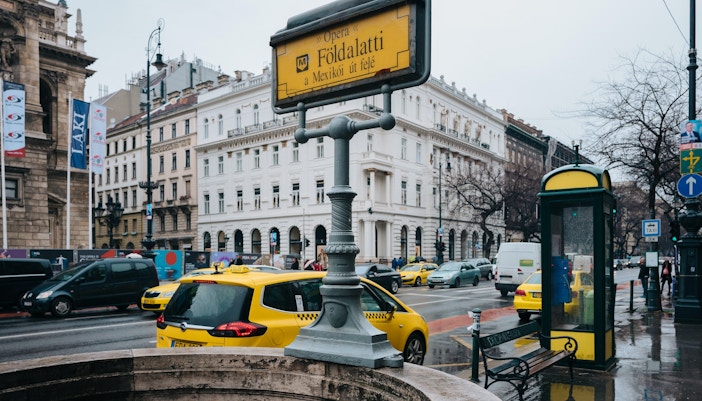
Getting to the Hungarian State Opera